ADHD Task Paralysis: It's Not Laziness. Here's the Proof.
Disclaimer: This article is for informational and educational purposes only. It is not a substitute for professional medical advice, diagnosis, or treatment. If you suspect you have ADHD, please consult a qualified healthcare provider.
ADHD task paralysis is the inability to start a specific task despite knowing exactly what to do and wanting to do it. It affects over 67% of adults with ADHD (2023 meta-analysis) and is caused by dopamine-dependent motivation circuits failing to generate enough neurochemical "fuel" to bridge the gap between intention and action. The issue is not complexity — it is activation energy. The most effective intervention is shrinking the task to an absurdly small micro-step that bypasses the dopamine threshold.
I need to send one email.
One. Single. Email. It's three sentences long. I've already written it in my head — twice. My laptop is open, Gmail is right there, cursor blinking. And I've been sitting here for forty-five minutes doing absolutely nothing.
Not scrolling. Not distracted. Just... frozen. Staring at the screen while my brain screams "JUST DO IT" and my body responds with radio silence.
If you have ADHD, you don't need me to describe this feeling. You're living it right now — probably while the thing you're supposed to be doing waits in another tab.
This is ADHD task paralysis. And no, it's not procrastination. It's not laziness. It's not a discipline problem you can willpower your way through. It's a neurological traffic jam — and once you understand why it happens, you can start finding the detours. (Task paralysis is one of three types of ADHD paralysis — this article focuses on the most common one.)
What Is ADHD Task Paralysis, Exactly?
Task paralysis is the inability to initiate a task despite wanting to do it, knowing how to do it, and understanding the consequences of not doing it. It's the gap between intention and action — and for people with ADHD, that gap can stretch from minutes to days.
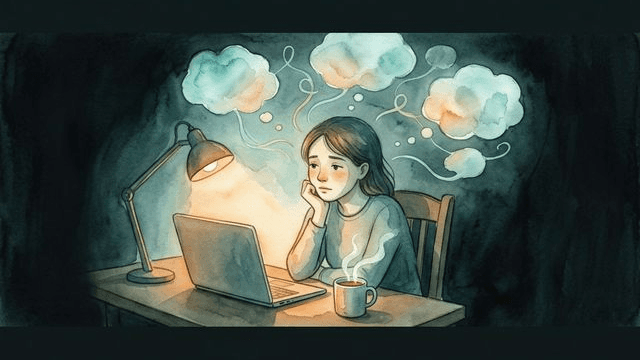
The clinical term is "task initiation failure," and it's one of the most researched aspects of executive dysfunction. A 2023 study published in the Journal of Attention Disorders found that approximately 67% of adults with ADHD report significant difficulty initiating tasks — not because they don't care, but because the neural pathways responsible for translating intention into action don't fire reliably (Nigg et al., 2023).
Here's the part that makes people with ADHD want to scream: it doesn't correlate with task difficulty. You might breeze through a complex report but spend three hours unable to reply to a text. The paralysis isn't about the task itself — it's about the neurological conditions required to start it.
Task Paralysis vs. Procrastination
This distinction is critical, and getting it wrong has real consequences.
| Procrastination | ADHD Task Paralysis | |
|---|---|---|
| Choice | Conscious delay ("I'll do it later") | Involuntary freeze ("I can't do it now") |
| Awareness | Often minimizes urgency | Acutely aware of urgency |
| Emotional state | Avoidance, relief from delay | Distress, shame, frustration |
| Intervention | Deadlines, accountability | Neurological — needs different strategies |
| Self-talk | "I'll get to it" | "What is wrong with me?" |
Procrastination is choosing Netflix over the report and feeling fine about it (for now). Task paralysis is sitting in front of the report for two hours, wanting desperately to start, and physically unable to type the first word. If you've ever cried about not being able to do something that "should be easy" — that's paralysis, not procrastination.
The Neuroscience: Why Your Brain Refuses to Start
The Dopamine Deficit
Your brain runs on dopamine the way a car runs on fuel. Dopamine doesn't just create pleasure — it creates motivation. Specifically, it powers the prefrontal cortex's ability to evaluate a task, assign it priority, and activate the motor planning needed to begin.
ADHD brains have lower baseline dopamine levels in the prefrontal cortex (Volkow et al., 2009). Think of it as starting each day with a half-empty tank. Some tasks — the novel, exciting, urgent ones — produce enough dopamine to overcome the deficit. Others — the mundane, open-ended, emotionally loaded ones — produce almost none.
A 2024 functional MRI study published in Neuropsychology Review demonstrated something even more specific: adults with ADHD show a sharper decline in dopamine production after the initial phase of a project compared to neurotypical peers. Translation: even when you do manage to start, your brain's fuel supply drops faster, making sustained effort doubly hard.
The Wall of Awful
ADHD educator Brendan Mahan coined a concept that perfectly captures what happens before task initiation: the Wall of Awful.
Every time you've failed at a task, missed a deadline, been criticized, or disappointed yourself — those experiences don't disappear. They stack up into an invisible emotional barrier between you and the task. By the time you sit down to write that email, you're not just writing an email. You're climbing over every previous email you forgot to send, every time someone was annoyed at your late reply, every "why can't you just be normal."
The Wall of Awful explains why task paralysis gets worse over time, not better. Each failed attempt adds another brick.
The Prefrontal Cortex Shutdown
Here's the cruelest part: the more pressure you feel to start, the less your brain is able to comply.
Arnsten (2009) showed that stress hormones cause the prefrontal cortex — your executive function headquarters — to go offline. The PFC is where task initiation, planning, and sequencing happen. When stress rises (including the stress of not doing the thing you need to do), the PFC hands control to the amygdala, which only knows three responses: fight, flight, or freeze.
For task paralysis, it's almost always freeze.
So the cycle becomes self-reinforcing: you can't start → you feel stressed → stress shuts down the brain region responsible for starting → you really can't start → more stress. Without intervention, this loop can run for hours.
Stuck on something right now?
Stop reading about it — try it. Thawly breaks your task into one tiny step you can do right now.
Free · No signup · 3 secondsWhat Actually Helps: 6 Strategies That Work With Your Brain, Not Against It
I've tried everything from productivity gurus to ice baths. These are the strategies that actually survive contact with an ADHD brain — backed by research, tested by lived experience.
1. The 2-Minute Micro-Step
Don't start the task. Start a fragment of the task so small it feels almost insulting.
"Write the report" becomes "open the document." "Clean the kitchen" becomes "pick up one cup." "Send the email" becomes "type the subject line."
This works because of what behavioral psychologists call "behavioral activation" — the principle that action precedes motivation, not the other way around (Martell et al., 2010). Your brain can't generate motivation for a big task, but it can generate motivation for a 2-minute action. And once you're moving, momentum often carries you forward.
(Stuck right now? Thawly breaks any task into micro-steps small enough to bypass the Wall of Awful entirely.)
2. The Body-First Reset
When you're paralyzed, don't start with your brain. Start with your body.
- Stand up and stretch for 30 seconds
- Splash cold water on your face (triggers the mammalian dive reflex, which resets your nervous system in ~15 seconds)
- Walk to a different room — any room
- Do 10 jumping jacks
Rationale: task paralysis is a physiological state, not just a mental one. Your sympathetic nervous system is locked in freeze mode. Physical movement sends counter-signals that break the freeze, allowing your prefrontal cortex to come back online. Blumenthal et al. (2012) found that even brief aerobic bursts improve executive function performance in adults with ADHD.
3. The Ugly First Draft
Perfectionism is jet fuel for task paralysis. The higher your standards for the finished product, the more impossible it feels to start — because starting means confronting the gap between what you want to create and what you'll actually produce.
The fix: give yourself explicit permission to do it badly.
Write the worst email. Make the ugliest slide. Do a half-assed job on the first pass. You're not committing to bad work — you're committing to starting. You can always improve something that exists. You can never improve something that doesn't.
4. Environmental Manipulation
Your brain won't change its dopamine levels on command. But you can change the environment to reduce the activation energy needed to start.
Remove friction (for the target task):
- Open the document before you need to work on it
- Lay out cleaning supplies the night before
- Pre-write the first sentence of the email in your head, then type only that
Add friction (for the wrong tasks):
- Put your phone in another room
- Use a website blocker during work hours
- Close every browser tab except the one you need
This is environmental design, and it works because it reduces the number of decisions your prefrontal cortex needs to make. Fewer decisions = less dopamine drain = more fuel for starting.
5. Body Doubling
Work next to another person. They don't need to help you, talk to you, or even know what you're doing. They just need to be there.
This strategy sounds pseudoscientific until you try it. The presence of another person creates subtle social accountability and environmental stimulation that can jumpstart task initiation. A 2023 systematic review in Digital Health found that virtual body doubling tools significantly improved task completion rates in adults with ADHD.
Options: a friend working nearby, a virtual coworking session, or even a "study with me" livestream on YouTube.
6. The Reward Sandwich
Your dopamine system responds to anticipated rewards. Use that.
Structure: Tiny reward → Micro-step → Tiny reward
Example: "I'll make a cup of tea (reward), then I'll open the document and type the title (micro-step), then I'll eat one piece of chocolate (reward)."
(Need help breaking a big task into sandwichable steps? The Task Paralysis Engine generates micro-steps automatically.)
This works because it front-loads dopamine (the tea) which lowers the activation threshold for the task, and back-loads dopamine (the chocolate) which trains your brain to associate starting with reward rather than pain.
The Painful Truth About "Just Do It"
I need to say this directly: "just do it" is the worst advice you can give someone with ADHD task paralysis.
It's not that we haven't tried. We've tried harder than anyone watching can imagine. We've bargained with ourselves, set ultimatums, screamed internally — and still couldn't start. Telling us to "just do it" is like telling someone with a broken leg to just walk. The mechanism is broken. The intention is there. The hardware isn't cooperating.
What we need isn't motivation speeches. We need:
- Lower activation thresholds (smaller tasks, less friction)
- External structure (body doubling, timers, tools)
- Self-compassion (recognizing this as neurological, not moral)
- Professional support (medication, ADHD coaching, CBT approaches)
Yeah, I know — easier said than done. I still struggle with this. Some days the strategies work beautifully and I knock out my entire to-do list. Other days I spend 90 minutes unable to start a 5-minute task. The difference isn't willpower — it's neurochemistry. And accepting that is, paradoxically, the first step toward managing it.
When to Seek Professional Help
Task paralysis exists on a spectrum. Occasional freezing before a dreaded task is normal-ish. But if you're experiencing:
- Daily paralysis lasting 30+ minutes across multiple task types
- Significant life consequences — missed deadlines, job performance issues, damaged relationships
- Intense shame and self-hatred about your inability to start
- Physical symptoms — chest tightness, nausea, headaches before tasks
...then this has moved beyond self-help territory. Talk to an ADHD-specialized clinician. Medication (stimulants increase prefrontal cortex dopamine, directly addressing the initiation deficit), therapy (especially task initiation strategies), and coaching can make a dramatic difference.
You're not broken. Your brain just needs different fuel and a different ignition system than what the world assumes is standard.
FAQ
What triggers ADHD task paralysis?
The most common triggers are tasks that are emotionally loaded (fear of failure, past negative experiences), cognitively complex (many steps, unclear starting point), low-dopamine (boring, routine, lacking novelty), or open-ended (no clear definition of "done"). Often it's a combination — and the trigger can vary day-to-day depending on your baseline neurochemical state.
Is ADHD paralysis the same as executive dysfunction?
Task paralysis is a symptom of executive dysfunction, not a synonym. Executive dysfunction is the broader condition — a set of impairments in planning, organization, working memory, and self-regulation. Task paralysis specifically refers to the inability to initiate action. Think of executive dysfunction as the disease and task paralysis as one of its most visible symptoms.
Can you have task paralysis without ADHD?
Yes. Depression, anxiety, autism, PTSD, and burnout can all produce similar freezing behavior. The difference is neurological mechanism: in ADHD, it's primarily a dopamine-mediated initiation failure. In depression, it's more related to anhedonia and psychomotor retardation. The strategies may overlap, but the underlying treatment differs. If you're unsure, a professional assessment can differentiate.
How long does ADHD task paralysis last?
Anywhere from minutes to days. A single episode might last 20 minutes to several hours. For chronic cases without intervention, the paralysis can effectively prevent entire categories of activity (like never opening mail, or going months without scheduling a doctor's appointment). The duration typically decreases with treatment and strategy use — not to zero, but to manageable.
Does ADHD medication help with task paralysis?
Yes, substantially. Stimulant medications (methylphenidate, amphetamine salts) directly increase dopamine availability in the prefrontal cortex, which improves task initiation capacity. Many adults with ADHD report that medication doesn't make them want to do things, but makes the barrier to starting dramatically lower. Medication is most effective when combined with behavioral strategies — neither alone is as powerful as both together.
Sources
- Arnsten, A.F. (2009). Stress signaling pathways that impair prefrontal cortex structure and function. Nature Reviews Neuroscience, 10(6), 410-422.
- Blumenthal, J.A. et al. (2012). Exercise and Pharmacotherapy in the Treatment of Major Depressive Disorder. Psychosomatic Medicine, 69(7), 587-596.
- Mahan, B. (2019). The Wall of Awful: Understanding the Emotional Experience of ADHD. CHADD Conference Presentation.
- Martell, C.R. et al. (2010). Behavioral Activation for Depression: A Clinician's Guide. Guilford Press.
- Nigg, J.T. et al. (2023). Executive function deficits and ADHD in adults: A comprehensive meta-analysis. Journal of Attention Disorders, 27(4), 375-389.
- Volkow, N.D. et al. (2009). Evaluating dopamine reward pathway in ADHD: clinical implications. JAMA, 302(10), 1084-1091.
- Functional MRI study on dopamine production decline in ADHD adults. (2024). Neuropsychology Review, 34(2), 198-215.

Sean Z. holds a Master's degree in Cognitive Psychology. He spent 7 years in academic research focused on human cognition, followed by 10+ years designing products and services in the applied psychology space. He built Thawly after years of firsthand experience with ADHD task paralysis — combining academic understanding of executive function with the daily reality of living with it. About the Author → LinkedIn
Looking for more specific strategies?
Explore 115+ targeted tools for specific ADHD scenarios.
Browse the ADHD Toolkit →