Task Initiation: Why Your Brain Won't Start (And 8 Fixes)
Disclaimer: This article is for informational and educational purposes only. It is not a substitute for professional medical advice, diagnosis, or treatment. If you suspect you have ADHD, please consult a qualified healthcare provider.
Task initiation — the ability to begin a task — is the #1 executive function deficit reported by adults with ADHD. Over 70% of Thawly users identify "I know what to do but I cannot begin" as their primary struggle. Task initiation requires dopamine to generate the neural signal that says "this action is worth starting," and ADHD brains have measurably lower dopamine availability in the prefrontal cortex (Volkow et al., 2009). The most effective strategies bypass the initiation barrier entirely through micro-steps, environmental priming, and externalized planning.
I had a report due last Friday. It wasn't complicated — maybe 45 minutes of actual work. I opened my laptop at 9 AM, fully intending to start. At 2:47 PM, I realized I'd reorganized my bookmarks, watched two YouTube videos about sourdough starters, and replied to every Slack message in existence.
The report? Still a blank document.
The cruelest part wasn't that I couldn't finish it. It was that I couldn't start it. The cursor blinked at me like a challenge I'd already lost.
If this sounds familiar, you're not dealing with laziness or procrastination. You're dealing with a task initiation deficit — one of the most common and least understood symptoms of executive dysfunction.
What Is Task Initiation, Really?
Task initiation is exactly what it sounds like: the ability to begin a task. But "beginning" is deceptively complex. It's not just deciding to do something — it's the neurological process of converting intention into action.
Think of it like a car. You know where you want to go (the goal). You have fuel (motivation, at least some). But the ignition system — the part that actually starts the engine — is unreliable.
In clinical terms, task initiation is one of the core executive functions identified by researchers like Dawson and Guare (2010). It works alongside planning, organization, and working memory to turn thoughts into behavior. When any of these systems falter, the whole chain breaks — but task initiation failure is particularly devastating because nothing else matters if you can't start.
Dr. Russell Barkley's research (2012) frames this more bluntly: ADHD isn't a disorder of not knowing what to do. It's a disorder of not doing what you know. The knowledge is there. The skill is there. The bridge between "I should" and "I am" is just... missing some planks.
The Neuroscience: Why Your Brain Won't Let You Start
The Dopamine Gap
The prefrontal cortex — your brain's CEO — relies on dopamine to initiate goal-directed behavior. Volkow et al. (2009) demonstrated through PET imaging that adults with ADHD have significantly reduced dopamine transporter availability in the brain's reward circuits, particularly the nucleus accumbens.
Here's the practical impact: your brain evaluates every potential action through a reward lens. Neurotypical brains can generate enough internal reward anticipation to start low-stimulation tasks. ADHD brains can't.
It's not that you don't care about the task. It's that your brain's reward prediction system can't generate enough "pull" to overcome the activation energy required to begin.
The Activation Energy Problem
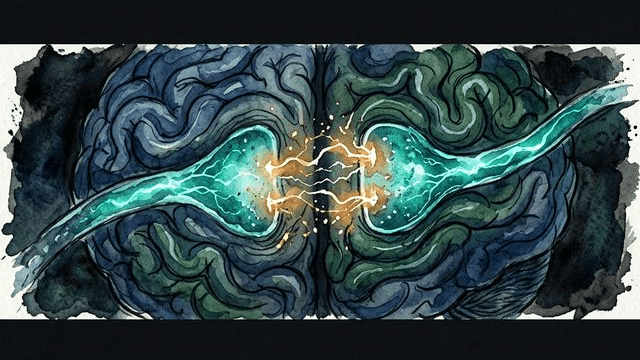
Physicist-turned-ADHD-researcher Dr. William Dodson calls this the "interest-based nervous system." Neurotypical brains operate on importance-based decisions (I should do this → I'll do it). ADHD brains operate on interest, challenge, novelty, and urgency.
That's why you can't start the mundane report but could hyperfocus on building an Arduino weather station for six hours straight. The initiation system isn't broken universally — it's selectively impaired for tasks that lack intrinsic neurochemical reward.
The Emotional Barrier
Starting a task also means confronting the possibility of failure. Barkley (2015) emphasizes that emotional dysregulation in ADHD amplifies this effect. Every task becomes emotionally "weighted" — layered with memories of past failures, fears of doing it wrong, and the accumulated shame of every time you've been told you're "not trying hard enough." (Stuck in this cycle right now? Try our Executive Dysfunction Bypass.)
This emotional weight makes the activation energy even higher. You're not just starting a task. You're starting a task while dragging an invisible backpack full of every time you previously couldn't. (This burden is especially heavy for women with ADHD, who often carry decades of undiagnosed shame.)
Stuck on something right now?
Stop reading about it — try it. Thawly breaks your task into one tiny step you can do right now.
Free · No signup · 3 seconds8 Evidence-Based Strategies That Actually Work
I've tested dozens of productivity hacks. Most of them assume a functional initiation system — which is like giving someone a GPS when their car won't start. These are the strategies that address the actual bottleneck.
1. The Absurd Micro-Step
Don't start the task. Start the first physical action of the task.
Not "write the report." Not even "write one paragraph." Try: "Open the document and type the date." That's it.
This leverages the Zeigarnik effect (Zeigarnik, 1927) — the brain's tendency to fixate on incomplete actions. Once you've opened the document, you've created an "open loop." Your brain doesn't like open loops. It will push you to do something with that blank page.
Gollwitzer & Sheeran (2006) found in a meta-analysis of 94 studies that reducing the complexity of the intended action significantly increased follow-through rates — by an average of 65%.
I use this every single day. My rule: if the micro-step takes less than 2 minutes, I'm not allowed to negotiate with myself about it. Nine times out of ten, once the file is open, I start typing. (Need help breaking tasks into micro-steps? That's exactly what our Task Breakdown Engine does.)
2. If-Then Triggers
Gollwitzer's research (1999) on implementation intentions is one of the most replicated findings in behavioral psychology. The format is simple:
"If [specific situation], then I will [specific action]."
- "If I sit down at my desk after coffee, then I will open the report file."
- "If my alarm goes at 10 AM, then I will write one sentence."
- "If I sit in my desk chair, then I will click on the first task in my list."
Why this works: it offloads the decision from your prefrontal cortex to the environment. You're essentially pre-programming your response, creating "strategic automaticity" that doesn't require the dopamine-dependent deliberation system. The environmental cue does the work your executive system can't.
Gawrilow et al. (2011) confirmed this specifically works for ADHD populations — children using if-then plans showed significant improvement in response inhibition and task initiation. This technique is so effective that we wrote an entire deep-dive on it: Implementation Intentions for ADHD: The If-Then Hack That Automates Task Initiation — including 10 ready-to-use templates and how AI can build them for you.
3. Body Doubling
Body doubling means working alongside someone — physically or virtually. The other person doesn't need to help you, talk to you, or even be doing the same task. Their mere presence provides a gentle social pressure and mild arousal that substitutes for the internal drive your prefrontal cortex can't generate.
Social facilitation research (Zajonc, 1965) shows that the presence of others increases physiological arousal, which enhances performance on simple or well-learned tasks. For initiation specifically, the arousal boost helps cross the activation threshold.
Practical options:
- A coworker in a coffee shop (you don't even need to talk)
- A virtual co-working session on Focusmate or similar platforms
- A friend who agrees to a "silent work hour" video call
I body double almost every day. My partner works at the kitchen table while I work at my desk. We don't interact. But somehow, knowing another person is also working makes starting feel possible. (When body doubling isn't available, try our Executive Dysfunction Bypass tool — it acts as a digital accountability partner.)
4. Environmental Scaffolding
This isn't about "being organized." It's about friction engineering:
Reduce friction for the target task:
- Leave the document/tab/app open overnight
- Put the task materials in the exact spot you'll be sitting
- Set out everything you need the night before
Increase friction for distractions:
- Log out of social media (the login screen adds 5 seconds of friction — often enough)
- Put your phone in another room
- Use website blockers during your intended work window

The goal is asymmetric friction: make starting the task easier than not starting it. Thaler & Sunstein (2008) call this "choice architecture" — structuring the environment so the desired behavior becomes the default.
5. The Transition Ritual
The initiation problem is partly a context-switching problem. Your brain is in "not-working" mode, and switching to "working" mode requires a disruptive cognitive transition. A ritual smooths that transition.
Examples of transition rituals:
- Make a specific tea → put on headphones → open task manager → start
- Walk to your desk → write today's date on a sticky note → pick up pen
- 3 deep breaths → open laptop → read the first item on your list
The ritual itself isn't productive. It's a neurological runway — a predictable sequence that gradually shifts your brain from passive to active. Over time, the ritual becomes a conditioned cue that triggers work-mode automatically.
Keep it under 5 minutes. The point is transition, not preparation.
6. Temptation Bundling
This strategy was formalized by Milkman et al. (2014) at Wharton. The concept: you only allow yourself to enjoy a specific pleasure while doing the task you're avoiding.
Examples:
- Listen to your favorite podcast only while doing data entry
- Drink your best coffee only while working on the report
- Sit in the comfortable chair only while reviewing documents
This creates an artificial dopamine reward tied to the task itself. Your brain starts to associate the difficult task with the pleasurable stimulus, lowering the initiation barrier over time.
7. Reduce the Decision Load
Every decision you make before starting drains the same limited dopamine supply needed for initiation. Pre-decide everything:
- When you'll do it (specific time, specific trigger)
- Where you'll do it (same spot every time)
- What the first action is (written down, not in your head)
This is why routines work so well for ADHD brains — not because of discipline, but because they eliminate the cognitive tax of continuous re-deciding.
8. Visible Timers & Artificial Urgency
Set a 15-minute timer where you can see it counting down. The visual countdown creates artificial urgency — which is one of the four activators for the interest-based nervous system (Dodson, 2005).
Your brain can't generate urgency for a task due next week. But it can respond to a timer hitting zero in 14 minutes and 38 seconds. You're hacking the same emergency-response system that lets you finish a week's work in two hours the night before a deadline.
Combining Strategies: A Real Example
Here's my actual morning routine for a task I've been avoiding:
- The night before: I leave the document open on my screen (environmental scaffolding)
- Morning: I make my coffee — this is my transition ritual
- If-then trigger: "If I sit down with coffee, then I will read the first sentence of the document"
- Micro-step: I read one sentence. That's it. That's the commitment.
- Temptation bundling: I'm allowed to drink the good coffee only at my desk while working
Does it work every time? No. Some mornings my brain wins and I spend an hour on Reddit anyway. But the success rate went from maybe 20% to about 75% — and that's enough to change a life.
What Thawly Does Differently
Most productivity tools assume you can start. They help you organize, prioritize, and schedule — but they leave you alone at the hardest moment: the first keystroke.
Thawly was built specifically for the initiation gap. When you tell it what you need to do, it doesn't just create a to-do list. It decomposes the task into micro-steps small enough to bypass the activation barrier, then walks you through them one at a time.
Hundreds of users have told us the same thing: the hardest part isn't doing the work. It's starting the work. Once they're moving, momentum takes over. Thawly exists to get you moving.
For a deeper comparison of task initiation tools, see our guide: Goblin Tools ADHD Task Breakdown: 7 Better Alternatives.
The Uncomfortable Truth
Here's what I wish someone had told me years ago: task initiation doesn't get easier through willpower. You can't discipline your way past a neurochemical deficit.
But you can build systems. External scaffolding. Environmental cues. Pre-committed responses. These aren't "cheating" — they're doing exactly what the clinical research recommends.
Yeah, some days the systems don't work either. I still have mornings where I stare at a blank screen for an hour. The difference is that now I know why, and I have a toolbox to pull from instead of just shame.
If you're reading this and recognizing yourself in every paragraph — that recognition is the first step. (See what I did there?)
FAQ
Is task initiation the same as procrastination?
No. Procrastination typically involves a voluntary delay — choosing to do something more pleasant instead. Task initiation failure is involuntary. You want to start. You intend to start. Your brain simply doesn't execute the "go" command. The subjective experience is fundamentally different: procrastinators feel avoidance; people with initiation failure feel paralyzed.
Can medication fix task initiation problems?
Stimulant medications increase dopamine and norepinephrine availability in the prefrontal cortex, which can significantly improve task initiation for many people with ADHD. However, medication alone doesn't teach your brain new initiation strategies — it raises the floor, not the ceiling. The most effective approach, according to Safren et al. (2005), combines medication with cognitive behavioral strategies.
Why can I start some tasks but not others?
Your brain uses an interest-based activation system (Dodson, 2005). Tasks that are novel, challenging, urgent, or intrinsically interesting generate enough dopamine to cross the initiation threshold naturally. Mundane, familiar, or emotionally loaded tasks don't. This is why you can hyperfocus on a video game for hours but can't start a five-minute email.
How is task initiation related to executive dysfunction?
Task initiation is one component of the broader executive function system. Executive dysfunction affects planning, working memory, emotional regulation, and more. Task initiation is specifically the "start" function — but it's often the most visible bottleneck because if you can't start, everything downstream is irrelevant.
How long does it take for these strategies to become habits?
The "21 days to a habit" myth isn't supported by research. Lally et al. (2010) found that habit formation takes an average of 66 days, with a range of 18 to 254 days. But here's the important nuance: you don't need these to become habits to benefit from them. They work as conscious strategies too. Use them deliberately until they become automatic — and even then, keep the sticky notes.
Does task initiation improve with age?
Executive functions, including task initiation, continue to develop into the mid-20s (Giedd, 2004). Some people experience modest improvement over time as compensatory strategies accumulate. However, for most adults with ADHD, the deficit remains and requires ongoing structural support — it doesn't simply resolve.
Sources
- Barkley, R.A. (2012). Executive functions: What they are, how they work, and why they evolved. Guilford Press.
- Barkley, R.A. (2015). Attention-Deficit Hyperactivity Disorder: A Handbook for Diagnosis and Treatment. 4th ed. Guilford Press.
- Dawson, P. & Guare, R. (2010). Executive skills in children and adolescents. Guilford Press.
- Gawrilow, C. et al. (2011). If-then plans benefit executive functions in children with ADHD. Journal of Social and Clinical Psychology, 30(6), 616-646.
- Gollwitzer, P.M. (1999). Implementation intentions: Strong effects of simple plans. American Psychologist, 54(7), 493-503.
- Gollwitzer, P.M. & Sheeran, P. (2006). Implementation intentions and goal achievement: A meta-analysis. Advances in Experimental Social Psychology, 38, 69-119.
- Lally, P. et al. (2010). How are habits formed: Modelling habit formation in the real world. European Journal of Social Psychology, 40(6), 998-1009.
- Milkman, K.L. et al. (2014). Holding the Hunger Games hostage at the gym. Management Science, 60(2), 283-299.
- Safren, S.A. et al. (2005). Cognitive-behavioral therapy for ADHD in medication-treated adults with continued symptoms. Behaviour Research and Therapy, 43(7), 831-842.
- Volkow, N.D. et al. (2009). Evaluating dopamine reward pathway in ADHD. JAMA, 302(10), 1084-1091.
- Zajonc, R.B. (1965). Social facilitation. Science, 149(3681), 269-274.
- Zeigarnik, B. (1927). On finished and unfinished tasks. Psychologische Forschung, 9, 1-85.

Sean Z. holds a Master's degree in Cognitive Psychology. He spent 7 years in academic research focused on human cognition, followed by 10+ years designing products and services in the applied psychology space. He built Thawly after years of firsthand experience with ADHD task paralysis — combining academic understanding of executive function with the daily reality of living with it. About the Author → LinkedIn
Looking for more specific strategies?
Explore 115+ targeted tools for specific ADHD scenarios.
Browse the ADHD Toolkit →