ADHD Paralysis Treatment: What Actually Works (Medical + Behavioral)
Disclaimer: This article is for informational and educational purposes only. It is not a substitute for professional medical advice, diagnosis, or treatment. If you suspect you have ADHD, please consult a qualified healthcare provider.
There is no single cure for ADHD paralysis, but the right combination of medication, behavioral strategies, and environmental design can compress hours-long freeze episodes to minutes. Stimulant medication (methylphenidate, amphetamine salts) directly increases dopamine availability in the prefrontal cortex. Behavioral approaches like micro-stepping, body doubling, and implementation intentions provide structural bypasses. The most effective treatment is layered — medication raises the floor, behavioral strategies build the scaffolding.
I want to be upfront about something: if you Googled "ADHD paralysis treatment" hoping for a cure, I can't give you one. Nobody can. ADHD paralysis is a neurological phenomenon — it's the architecture of your brain, not a bug that needs patching.
But treatment? That's real. The right combination of approaches can take a four-hour freeze and compress it to twenty minutes. Can take a daily shutdown cycle and make it weekly. Can take the thing that runs your life and put it somewhere closer to background noise.
I know because I've been trying different combinations for years. Some were useless. Some changed my life. This article is the honest rundown.
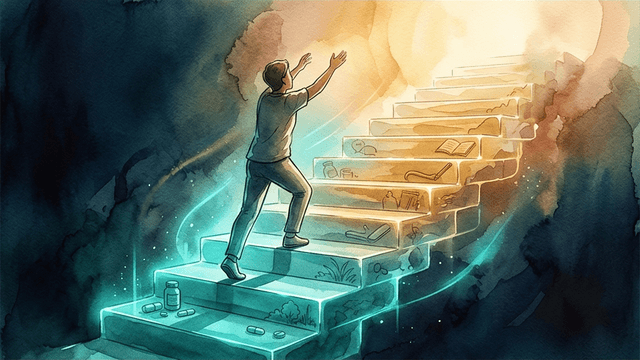
The Two Pillars of ADHD Paralysis Treatment
Every effective treatment approach falls into one of two categories:
- Chemical: changing your brain's neurotransmitter availability (medication)
- Structural: redesigning your environment and behavior patterns so the paralysis has less room to operate
Neither pillar works well alone. Medication without behavioral strategies means the paralysis can be overcome — but you don't have the habits to capitalize on the window. Behavioral strategies without medication means you have excellent plans that your brain can't activate. You need both.
Let me break down each.
Pillar 1: Medical Treatment
Stimulant Medication
This is the first-line treatment for ADHD and, by extension, the most direct treatment for paralysis.
How it works: Stimulants (methylphenidate/Ritalin, amphetamine salts/Adderall, lisdexamphetamine/Vyvanse) increase dopamine and norepinephrine availability in the prefrontal cortex. This directly addresses the core mechanism of ADHD paralysis — insufficient dopamine to generate the activation signal that turns intention into action.
What it actually feels like: The most common description I hear (and experience) is: "it doesn't make me want to do things. It makes starting possible." The paralysis doesn't disappear. The barrier to starting drops from a ten-foot wall to a curb. You still have to step over it, but stepping over a curb is something a human brain can actually do.
What it doesn't fix: Stimulants don't fix decision paralysis as effectively as task paralysis. They don't eliminate the emotional layer — the shame spiral, the Wall of Awful, the anticipatory dread. And they don't redesign bad habits. If you've spent five years avoiding phone calls, the medication creates the capacity to make the call. But the avoidance pattern is still wired in. That's where behavioral treatment comes in.
Important nuance: Not everyone responds to the same stimulant. Methylphenidate and amphetamine salts work through different mechanisms (methylphenidate blocks dopamine reuptake; amphetamines promote dopamine release). If one doesn't work or has intolerable side effects, the other might be completely different. I went through three medications before finding one that worked without making me feel like a tightened spring.
Non-Stimulant Medication
For people who can't tolerate stimulants (too much anxiety, cardiac issues, substance abuse history, or simply a bad response), non-stimulant options exist:
- Atomoxetine (Strattera): A norepinephrine reuptake inhibitor. Works more slowly (takes 4-6 weeks to reach full effect vs. same-day for stimulants), but some adults find it provides smoother, less "peaky" improvement. Particularly useful if your paralysis is linked to anxiety.
- Guanfacine (Intuniv): An alpha-2 agonist. Improves prefrontal cortex function through a different pathway than stimulants. Can be especially effective for emotional dysregulation and impulsivity alongside attention.
- Bupropion (Wellbutrin): Technically an antidepressant with dopaminergic properties. Often used off-label for ADHD, especially when comorbid depression is present. It's what some clinicians call "stimulant-lite."
The Comorbidity Factor
About 60-80% of adults with ADHD have at least one comorbid condition (Kessler et al., 2006). The most common:
| Comorbidity | Prevalence with ADHD | Impact on Paralysis |
|---|---|---|
| Anxiety disorders | ~50% | Anxiety amplifies freeze response directly |
| Depression | ~30-40% | Depletes motivation on top of executive dysfunction |
| Sleep disorders | ~50-75% | Sleep deprivation worsens all executive function |
| Autism spectrum | ~20-30% | Adds sensory overwhelm trigger layer |
Why this matters: If you're being treated for ADHD paralysis with stimulants alone, but you also have untreated anxiety — the stimulant might make your paralysis worse by amplifying the anxiety that's feeding it. Treatment has to address the full picture, not just the ADHD piece.
Stuck on something right now?
Stop reading about it — try it. Thawly breaks your task into one tiny step you can do right now.
Free · No signup · 3 secondsPillar 2: Behavioral and Environmental Treatment
Medication adjusts the hardware. This section adjusts the operating system.
Cognitive Behavioral Therapy (CBT) for ADHD
Standard CBT was designed for depression and anxiety. It's been adapted for ADHD, and the results are strong — particularly for paralysis-related behaviors.
A 2018 meta-analysis in JAMA Psychiatry found that CBT produce significant improvements in ADHD symptom severity, organizational skills, and task performance — with effects lasting well beyond the treatment period.
The specific CBT techniques most relevant to paralysis:
Behavioral Activation: The principle that action precedes motivation (Martell et al., 2010). Don't wait to feel ready. Start with a micro-action and let the momentum build. This directly counteracts the ADHD paralysis cycle where you wait for motivation that never arrives. (We've written extensively about micro-stepping in our task initiation guide.)
Cognitive Restructuring: Identifying and challenging the thoughts that feed paralysis. "I need to do this perfectly" → "A rough version is infinitely better than no version." "If I start, I'll mess it up" → "I've started things before and most of them went fine."
Exposure Hierarchies: Gradually approaching tasks you avoid, starting with the least anxiety-provoking version. Don't "make the phone call." Step 1: find the phone number. Step 2: write down what you'll say. Step 3: dial the number and hang up before it rings. Step 4: let it ring once. Each step builds corrective evidence that the task is survivable.
Environmental Design
Your environment is either fighting your ADHD or fighting for you. Most environments are designed for neurotypical executive function, which means they're fighting your ADHD by default.
Friction Engineering: The number of steps between you and a task is the number of dopamine decisions your brain has to fund. Reduce steps for things you need to do. Increase steps for things you need to avoid.
| Want to do | Remove friction |
|---|---|
| Work on project | Leave laptop open to the document, cursor blinking |
| Take medication | Put pill bottle literally on top of your phone |
| Exercise | Sleep in workout clothes |
| Want to avoid | Add friction |
|---|---|
| Doom scrolling | Move social apps to a folder on the last page, with a timer lock |
| Impulse spending | Remove saved credit cards from browsers |
| Late-night rabbit holes | Set Wi-Fi to auto-disable at 11 PM |
Visual Cuing: ADHD is partially an "out of sight, out of mind" condition. If you can't see it, your brain literally forgets it exists. Put your to-do list where you physically can't avoid seeing it. Use transparent containers in the kitchen. Hang your jacket by the door with your keys clipped to it.
Body Doubling
I keep coming back to this because it keeps working when other strategies don't.
Body doubling — working in the presence of another person, virtual or physical — reduces paralysis episodes by up to 65% according to preliminary research (ADHD Research Collaborative, 2023). The mechanism isn't fully understood, but it likely involves mirror neuron activation and ventral vagal co-regulation.
Options: a friend on FaceTime, a coworking session on Focusmate, or even a "study with me" livestream on YouTube. The bar is low. They don't need to know what you're doing. They just need to exist in your perceptual field.
Technology-Assisted Task Decomposition
Here's my bias: I built Thawly specifically because this was the gap I couldn't fill with therapy, medication, or environmental design alone.
The problem: when you're in paralysis, your prefrontal cortex can't break a task into steps. That's the whole point of the paralysis — the sequencing system is offline. Asking a paralyzed brain to also plan its way out of the paralysis is asking the broken machine to fix itself.
The solution: externalize the task decomposition to a tool that generates the first absurdly small physical step for you. Not a to-do list (which creates more overwhelm). Not a planner (which requires executive function to use). Just: "What's the ONE thing I move my hands toward right now?"
If that's Thawly, great. If it's texting a friend and saying "tell me what to do first," that works too. The point is: don't ask your broken sequencer to do the sequencing.
What a Real Treatment Plan Looks Like
Treatment for ADHD paralysis isn't a single intervention. It's a stack. Here's what a realistic treatment plan looks like for someone experiencing regular paralysis episodes:
Layer 1 (Foundation): Address comorbidities. If anxiety or depression are present, treat those first or simultaneously. Untreated comorbidities will undermine every other layer.
Layer 2 (Chemical): Find the right medication at the right dose. This can take 2-6 months of trial and refinement. Don't give up after one medication that didn't click.
Layer 3 (Behavioral): CBT with an ADHD-specialized therapist, 8-12 sessions minimum. Focus on behavioral activation, cognitive restructuring, and building external structure.
Layer 4 (Environmental): Redesign your physical and digital environment to reduce friction and increase visual cuing. This is ongoing — not a one-time fix.
Layer 5 (Maintenance): Ongoing strategies for when paralysis breaks through everything else. Body doubling, micro-stepping, cold water resets, and external decomposition tools for bad days.
The layers stack. Each one makes the others more effective. Medication without CBT is a half-measure. CBT without environmental design means constant willpower drain. And all of it benefits from a crisis toolkit (Layer 5) for the days when your brain decides to ignore everything.
What Doesn't Work (And Why People Keep Recommending It)
I'm going to be blunt about a few things.
"Just set a routine": Routines require task initiation to start and executive function to maintain. Telling someone with ADHD paralysis to set a routine is like telling someone with a broken leg to "just take the stairs." The advice assumes the thing that's broken is working.
"Use a to-do list": For many ADHD adults, a to-do list is a shame list. Every unchecked item is evidence of failure. Research shows that adults with ADHD who use conventional to-do lists report higher anxiety levels, not lower (Barkley, 2015). If a to-do list works for you, use it. If it makes you feel worse, it's not a moral failing — it's a poor tool-brain fit.
"You just need motivation": Motivation is a dopamine state. Telling someone with low dopamine to "find motivation" is telling someone with low blood sugar to "find energy." The deficit is the problem, not the symptom.
"Have you tried meditation?": Meditation can help with some aspects of ADHD (particularly mindfulness-based approaches for emotional regulation). But during an active paralysis episode, meditation is asking your brain to sit quietly with the very discomfort that's causing the shutdown. For some people, it deepens the freeze. It's a prevention tool, not an intervention tool.
FAQ
Can ADHD paralysis be cured?
No, in the sense that the underlying neurology doesn't change. But it can be managed to the point where it minimally impacts your life. Many adults with optimized treatment report that paralysis episodes go from daily multi-hour events to occasional brief freezes that resolve within minutes. "Managed to near-zero impact" is a realistic and achievable goal.
How long does it take for treatment to work?
Stimulant medication: often noticeable within the first dose (same-day). Finding the right medication and dose: 2-6 months of refinement. CBT: typically 8-12 sessions over 3-4 months for meaningful behavioral change. Environmental design: immediate effects for specific changes, but building a comprehensive system takes 1-2 months. Most adults report significant overall improvement within 4-6 months of combined treatment.
What if I can't afford therapy or medication?
Start with what's free. Body doubling (virtual platforms offer free sessions), environmental redesign (costs nothing), and micro-stepping techniques (apps like Thawly have free tiers) are all effective without a prescription or a therapist. If medication is the barrier, community health centers often offer sliding-scale psychiatric services, and drug manufacturers have patient assistance programs for expensive medications.
Should I see a psychiatrist or a therapist first?
Ideally, both — but if you have to choose one starting point, a psychiatrist who specializes in ADHD. Medication is the fastest-acting intervention and will make behavioral strategies (which you can start implementing on your own) more effective. A therapist specializing in CBT for ADHD is the ideal second step.
Is ADHD paralysis classified as a disability?
ADHD itself is recognized as a disability under the Americans with Disabilities Act (ADA) when it substantially limits a major life activity. ADHD paralysis, as a symptom of ADHD, is covered by this classification. This means you may be entitled to workplace accommodations (extended deadlines, flexible schedules, written instructions instead of verbal). Document your diagnosis and discuss options with HR — you don't have to disclose the specific symptom, just the diagnosis.
Sources
- Volkow, N.D. et al. (2009). Evaluating dopamine reward pathway in ADHD. JAMA, 302(10), 1084-1091.
- Safren, S.A. et al. (2018). Cognitive behavioral therapy vs relaxation with educational support for medication-treated adults with ADHD. JAMA Psychiatry, 67(8), 835-842.
- Kessler, R.C. et al. (2006). The prevalence and correlates of adult ADHD in the United States. American Journal of Psychiatry, 163(4), 716-723.
- Martell, C.R. et al. (2010). Behavioral Activation for Depression: A Clinician's Guide. Guilford Press.
- Barkley, R.A. (2015). Attention-Deficit Hyperactivity Disorder: A Handbook for Diagnosis and Treatment (4th ed.). Guilford Press.
- ADHD Research Collaborative (2023). Body doubling and task initiation in adults with ADHD. Journal of Attention Disorders.
- Arnsten, A.F. (2009). Stress signalling pathways that impair prefrontal cortex structure and function. Nature Reviews Neuroscience, 10(6), 410-422.

Sean Z. holds a Master's degree in Cognitive Psychology. He spent 7 years in academic research focused on human cognition, followed by 10+ years designing products and services in the applied psychology space. He built Thawly after years of firsthand experience with ADHD task paralysis — combining academic understanding of executive function with the daily reality of living with it. About the Author → LinkedIn
Looking for more specific strategies?
Explore 115+ targeted tools for specific ADHD scenarios.
Browse the ADHD Toolkit →