ADHD Burnout: The Hidden Crisis Nobody Talks About
Disclaimer: This article is for informational and educational purposes only. It is not a substitute for professional medical advice, diagnosis, or treatment. If you suspect you have ADHD, please consult a qualified healthcare provider.
ADHD burnout is a state of profound physical, mental, and emotional exhaustion caused by the chronic effort of compensating for ADHD in a neurotypically designed world. Unlike regular burnout (from doing too much), ADHD burnout comes from masking too much — manually running processes that neurotypical brains handle automatically. Chronic stress raises cortisol, which directly suppresses already-low dopamine production (Trainor, 2011), creating a devastating feedback loop that can collapse your entire coping system.
Last October, I stopped being able to do things I'd done successfully for years.
Not hard things. Basic things. Replying to a text message. Opening my laptop. Making lunch. I'd stare at my phone knowing I needed to respond to my friend, and 40 minutes would evaporate while I sat there holding the phone, doing literally nothing.
The worst part wasn't the paralysis — I'd lived with ADHD task paralysis for years. The worst part was that my strategies stopped working. The micro-steps, the timers, the body doubling, the if-then plans — all the scaffolding I'd spent years building just... collapsed. Like my brain had run out of whatever fuel made those systems function.
It took me three weeks to realize what was happening. This wasn't a bad day or a rough week. This was ADHD burnout — and it's a very different animal from regular burnout.
What Is ADHD Burnout?
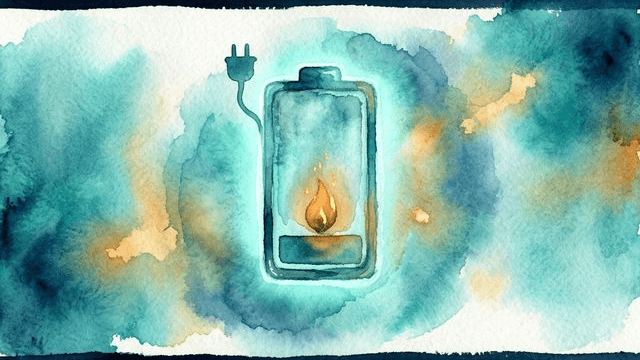
ADHD burnout is a state of profound physical, mental, and emotional exhaustion caused by the chronic effort of living with ADHD in a world designed for neurotypical brains.
Here's the critical distinction: regular burnout comes from doing too much. ADHD burnout comes from compensating too much.
Every day, your brain is running background processes that neurotypical people don't even have to think about:
- Filtering sensory input that your brain can't automatically deprioritize
- Manually managing time (because time blindness means you have no intuitive clock)
- Forcing yourself through tasks your dopamine system refuses to initiate
- Monitoring your own behavior to make sure you're "acting normal"
- Maintaining organizational systems that external memory requires
Raymaker et al. (2020) described a similar phenomenon in autistic individuals — a "pervasive, long-term exhaustion with loss of function" driven by the cumulative cost of camouflaging and navigating a neurotypically designed world. ADHD burnout follows a nearly identical pattern: the compensatory effort itself becomes the source of collapse.
You're not burned out because you worked too hard. You're burned out because you worked too hard at pretending your brain works like everyone else's.
How Is ADHD Burnout Different from Regular Burnout?
This distinction matters because the solutions are different.
| Regular Burnout | ADHD Burnout | |
|---|---|---|
| Primary cause | External demands exceeding capacity | Internal compensation effort exceeding capacity |
| Emotional tone | Cynicism, detachment, numbness | Heightened emotional intensity, rawness, shame |
| Performance pattern | Gradual, steady decline | Sharp swings — hyperfocus bursts → crash cycles |
| What breaks down | Work motivation and engagement | Core executive functions and coping strategies |
| Recovery approach | Reduce workload, take vacation | Restructure how you work, reduce masking |
When someone with regular burnout takes two weeks off, they usually come back refreshed. When someone with ADHD burnout takes two weeks off, they often come back worse — because the unstructured time removes the external scaffolding (deadlines, routines, social accountability) that was holding their executive function together.
Yeah. ADHD burnout punishes you for resting the "wrong" way. Welcome to the cruelest paradox in neurodivergent mental health.
Stuck on something right now?
Stop reading about it — try it. Thawly breaks your task into one tiny step you can do right now.
Free · No signup · 3 secondsWhat Causes ADHD Burnout in the Brain?
The Compensation Tax
Your prefrontal cortex is responsible for executive functions: planning, prioritizing, initiating, regulating emotions, filtering distractions. In ADHD, this system is already running at reduced capacity due to dopamine and norepinephrine dysregulation (Volkow et al., 2009).
But here's what most people miss: you've been compensating for this deficit your entire life. You built systems. You developed workarounds. You learned to mask. And every single one of those compensations costs extra cognitive energy. (Feel like your coping strategies have stopped working? Our Burnout Recovery Tool can help you rebuild from scratch.)
Think of it like this: a neurotypical brain drives a car with automatic transmission. Your brain drives a manual transmission — uphill — in the rain. You can do it. You've been doing it for years. But the engine is working twice as hard, and eventually, it overheats.
That overheat is ADHD burnout.
The Dopamine Depletion Spiral
Chronic stress increases cortisol, which directly suppresses dopamine production (Trainor, 2011). For a brain that's already dopamine-deficient, this creates a devastating feedback loop:
ADHD symptoms → extra effort to compensate → chronic stress →
cortisol rises → dopamine drops further → ADHD symptoms get worse →
even more effort needed → deeper stress → deeper dopamine depletion
This is why ADHD burnout feels qualitatively different from being tired. You're not just low on energy — you're low on the neurochemical that makes energy usable.
The Masking Collapse
Masking — consciously suppressing ADHD behaviors to appear neurotypical — is one of the highest-cost compensatory strategies. It requires constant self-monitoring, behavioral suppression, and emotional regulation — all executive functions that are already running on fumes.
When burnout hits, masking is usually the first thing to fail. Suddenly you can't maintain the performance anymore. You're late to everything. You forget conversations. You blurt things out. You seem "different" to people who only knew the masked version of you.
This isn't regression. It's the mask falling off because your brain can no longer afford to wear it. (Women with ADHD are especially vulnerable to masking-driven burnout — the diagnostic gap means they often mask longer before anyone catches it.)
What Are the Warning Signs of ADHD Burnout?
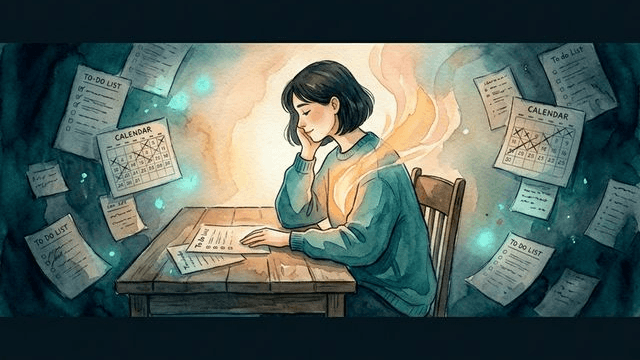
ADHD burnout doesn't arrive with a dramatic crash. It creeps in. These are the early signals:
1. Your Coping Strategies Stop Working
The timers, the lists, the apps, the routines — they used to work. Now they don't. Not because the strategies are wrong, but because you've depleted the executive resources needed to use them.
2. Things That Were Manageable Become Impossible
Tasks you've done a hundred times — paying a bill, loading the dishwasher, sending an email — now feel like climbing Everest. The difficulty level hasn't changed. Your available processing power has.
3. Emotional Responses Are Disproportionate
A minor setback triggers tears. A small criticism feels devastating. A spilled coffee becomes a full emotional meltdown. Your emotional regulation system has run out of buffer capacity.
4. You Oscillate Between Hyperfocus and Total Shutdown
One day you're productive for 14 hours straight. The next three days you can't get out of bed. The swings get wider and more extreme as burnout deepens. Those multi-day "off" periods? That's likely ADHD shutdown — your brain going into progressive low-power mode after the hyperfocus sprint depleted everything.
5. Physical Symptoms Appear
Persistent fatigue even after sleeping 10 hours. Headaches. Muscle tension in your jaw or shoulders. Stomach issues. Your body is converting psychological overload into physical distress.
6. You Start Withdrawing Socially
Not because you don't care about people — because social interaction requires executive resources you no longer have. Texting back feels like a task. Making plans feels overwhelming. Being around people is exhausting instead of energizing.
7. Intense Self-Criticism and Shame
"I used to be able to do this." "What's wrong with me?" "Everyone else handles this just fine." The shame spiral accelerates because you're comparing your burned-out self to your compensating self — not to your actual baseline.
How Do You Recover from ADHD Burnout?
Here's the uncomfortable truth first: you cannot productivity-hack your way out of ADHD burnout. Adding more systems to a depleted brain is like putting a heavier load on an overheated engine. Recovery requires the opposite — strategic subtraction.
1. Drop the Mask (Where Safe)
Identify spaces where you can stop performing neurotypicality. This might mean:
- Telling your partner "I need to sit in silence for an hour, it's not about you"
- Using noise-canceling headphones at work without apologizing for it
- Letting the house be messy for a week without self-punishment
Every unit of masking energy you reclaim goes directly back into your executive function reserve.
2. Audit Your Compensation Stack
Write down every system, strategy, and workaround you're currently using. Then honestly assess: which ones are still working, and which ones have become another source of stress?
A complex system that required energy to maintain but isn't delivering results anymore is a net drain. Kill it. You can rebuild later — right now, you need to stop the bleeding.
3. Structured Rest (Not Regular Rest)
Unstructured free time can make ADHD burnout worse because the lack of external structure means your depleted executive system has to self-direct — which is exactly what it can't do right now.
Structured rest means predictable, low-demand activities with clear boundaries:
- "I will watch two episodes of this show, then go for a 15-minute walk"
- "Saturday morning is for the coffee shop and a book. Nothing else."
- "I'm going to work on this puzzle for 30 minutes"
The structure removes the need for executive function. The low demand allows recovery.
4. Externalize Everything
Your working memory is the first casualty of burnout. Stop relying on it entirely:
- Physical to-do lists (single items, not overwhelming master lists)
- Phone alarms for everything — meals, medications, leaving the house
- Visual reminders in the physical space where the action happens
(Or let Thawly handle the decomposition for you — paste your task, get back a single next action that bypasses the executive function bottleneck.)
5. Protect Dopamine Sources
During burnout, your remaining dopamine needs to be spent wisely. Activities that provide genuine neurochemical reward — not just distraction — are medicine right now:
- Exercise: Even 20 minutes of walking increases dopamine and BDNF (Ratey, 2008). This is the single most evidence-backed intervention.
- Nature exposure: Kuo & Taylor (2004) found that outdoor time significantly reduced ADHD symptoms in children — adult studies show similar patterns.
- Creative outlets: Playing music, drawing, cooking — activities with immediate sensory feedback and no external evaluation.
What to reduce: doom-scrolling, news consumption, social media comparison. These provide micro-dopamine hits that don't recharge the system — they drain it faster.
6. Adjust Medication (With Your Doctor)
If you take ADHD medication, burnout can change how it works. The same dose may feel less effective because your baseline neurochemistry has shifted. Talk to your prescriber — sometimes a temporary dosage adjustment or medication holiday can help reset, but never make these changes alone.
7. Set a Recovery Timeline
ADHD burnout doesn't resolve in a weekend. Be honest with yourself about the timeline:
- Mild burnout (strategies faltering, increased effort): 2-4 weeks of consistent load reduction
- Moderate burnout (regular function impaired, emotional dysregulation): 1-3 months
- Severe burnout (total functional collapse): 3-6 months, likely with professional support
Knowing the timeline prevents the "why aren't I better yet?" shame spiral that extends burnout further. (Need help structuring your recovery? Our Executive Dysfunction tool can break recovery steps into manageable micro-actions.)
Can ADHD Burnout Be Prevented?
Here's what I wish someone had told me before I hit the wall: ADHD burnout is not a failure of effort. It's the predictable result of unsustainable effort.
If your current life requires you to mask for 10 hours a day, manually manage every aspect of time, and force-initiate every task through sheer compensatory effort — burnout isn't a possibility. It's a certainty. The only question is when.
Prevention means honestly assessing which parts of your life demand neurotypical performance and finding ways to either:
- Reduce those demands (different work environment, delegating, saying no)
- Build external supports (apps, routines, people, tools like Thawly)
- Drop the pretense (disclosing, accommodations, choosing authenticity over performance)
None of these are easy. All of them are easier than recovering from full burnout again.
I still have to remind myself of this. I still catch myself putting the mask back on, overriding my brain's "slow down" signals because the world expects a certain operating speed. The difference now is that I notice the warning signs earlier — and I prioritize recovery over performance when I see them.
Your burned-out brain isn't broken. It's been running a marathon at a sprint pace, in shoes that don't fit, on a track that wasn't built for your stride. The fact that you made it this far isn't evidence of weakness. It's evidence of extraordinary, invisible effort.
Now it's time to rest — the right way.
FAQ
Can ADHD burnout happen even if you're medicated?
Yes. Medication helps with the neurochemical component, but it doesn't eliminate the compensation effort. If you're still masking heavily, over-scheduling, or forcing yourself through tasks without appropriate support, you can burn out even with medication working properly. Medication raises the floor — it doesn't remove the ceiling.
How is ADHD burnout different from depression?
There's significant symptom overlap — fatigue, withdrawal, loss of motivation, difficulty concentrating. The key difference is cause and trajectory. Depression is a mood disorder with its own neurobiological pattern. ADHD burnout is an exhaustion response to chronic overcompensation. They can also co-occur, making diagnosis tricky. If your symptoms started after a sustained period of high compensatory effort, burnout is more likely. If they appeared without an obvious trigger, depression should be evaluated. Always consult a professional.
Can ADHD burnout cause permanent damage?
Not in the way you might fear. Executive functions don't permanently degrade from burnout. But chronic stress does cause measurable changes in brain structure — specifically, prolonged cortisol exposure can affect hippocampal volume and prefrontal cortex connectivity (Lupien et al., 2009). The damage is reversible with recovery, but it reinforces why prevention matters.
Is ADHD burnout the same as autistic burnout?
They're related but distinct. Both involve exhaustion from masking and navigating a neurotypically designed world. Autistic burnout tends to involve more sensory overwhelm and social withdrawal, while ADHD burnout centers on executive function collapse and dopamine depletion. People with both ADHD and autism (AuDHD) can experience both types simultaneously, which is particularly devastating.
How do I explain ADHD burnout to someone who doesn't have ADHD?
Try this: "Imagine you had to consciously control your own breathing 24/7 — every inhale, every exhale, manually. You could do it, but it would take all your energy, and eventually you'd reach a point where you simply couldn't sustain it anymore. That's what managing ADHD feels like — we manually run processes that happen automatically for most people. Burnout is what happens when the manual system gives out."
Sources
- Kuo, F.E. & Taylor, A.F. (2004). A potential natural treatment for attention-deficit/hyperactivity disorder: Evidence from a national study. American Journal of Public Health, 94(9), 1580-1586.
- Lupien, S.J. et al. (2009). Effects of stress throughout the lifespan on the brain, behaviour and cognition. Nature Reviews Neuroscience, 10(6), 434-445.
- Ratey, J.J. (2008). Spark: The Revolutionary New Science of Exercise and the Brain. Little, Brown and Company.
- Raymaker, D.M. et al. (2020). "Having all of your internal resources exhausted beyond measure and being left with no clean-up crew": Defining autistic burnout. Autism in Adulthood, 2(2), 132-143.
- Trainor, B.C. (2011). Stress responses and the mesolimbic dopamine system: Social contexts and sex differences. Hormones and Behavior, 60(5), 457-469.
- Volkow, N.D. et al. (2009). Evaluating dopamine reward pathway in ADHD. JAMA, 302(10), 1084-1091.

Sean Z. holds a Master's degree in Cognitive Psychology. He spent 7 years in academic research focused on human cognition, followed by 10+ years designing products and services in the applied psychology space. He built Thawly after years of firsthand experience with ADHD task paralysis — combining academic understanding of executive function with the daily reality of living with it. About the Author → LinkedIn
Looking for more specific strategies?
Explore 115+ targeted tools for specific ADHD scenarios.
Browse the ADHD Toolkit →