Executive Dysfunction Therapy: What Works, What Doesn't, and How to Choose
Disclaimer: This article is for informational and educational purposes only. It is not a substitute for professional medical advice, diagnosis, or treatment. If you suspect you have ADHD, please consult a qualified healthcare provider.
The most effective therapies for executive dysfunction are CBT adapted for ADHD, ADHD coaching, and occupational therapy. Traditional talk therapy helps with understanding but rarely improves task initiation or working memory. The key distinction is that executive dysfunction is a skills-and-systems problem, not an insight problem — effective therapy must build external structures, not just explore feelings.
My first therapist was wonderful. She was empathetic, validating, and genuinely insightful. After six months of weekly sessions, I understood my childhood patterns, my attachment style, and the root of my relationship anxiety.
I still couldn't do my taxes. Or clean my apartment. Or reply to emails within the same calendar week they arrived.
Here's what nobody told me: traditional psychotherapy — the kind where you process emotions, explore your past, and build self-awareness — is not designed to fix executive dysfunction. It's like going to an eye doctor for a broken ankle. The doctor is real. The medicine is real. But it's the wrong department.
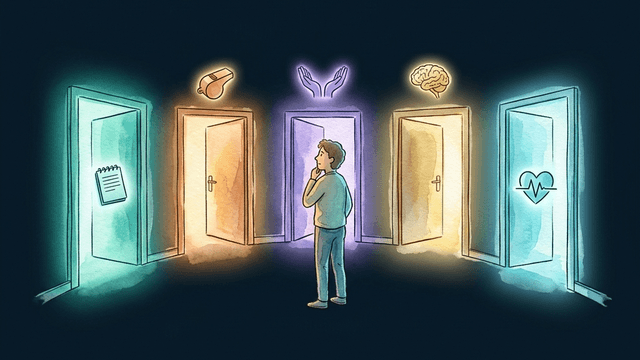
Executive dysfunction needs executive dysfunction therapy — specific, targeted approaches that address the planning, initiation, and self-regulation deficits that make daily life feel like swimming through concrete.
What Makes Executive Dysfunction Therapy Different
Standard therapy assumes you can take insights from the session and implement them in your life. "Notice when you're feeling overwhelmed and take a break." "Set boundaries when you're overcommitted." "Practice self-compassion when you miss a deadline."
These are excellent ideas. They require executive function to implement. Which is the thing that's broken.
Executive dysfunction therapy flips the model. Instead of insight → behavior change, it works on structure → habit formation → reduced executive demand. The goal isn't understanding why you can't start tasks. The goal is building external systems that make starting tasks possible even when your brain isn't cooperating.
The Evidence-Based Options
1. CBT for ADHD (Cognitive Behavioral Therapy)
What it is: A structured, skill-building therapy that targets specific executive function deficits — not emotions, not childhood, not relationships, but the actual daily tasks your brain can't manage.
What a session looks like: Your therapist helps you identify a specific failure pattern (e.g., "I can't start work projects until the deadline creates panic"). Together, you design a behavioral experiment: try a different approach for one week. You implement it. You report back. You adjust. Repeat.
The evidence: Safren et al.'s landmark study (2010) in JAMA found that CBT specifically designed for adult ADHD produced significant improvements in ADHD symptoms, functional impairment, and self-reported quality of life — even in patients already on medication. The effects persisted 12 months after treatment ended.
Key techniques:
- Behavioral activation: Action before motivation. Schedule micro-tasks and do them regardless of how you feel. Over time, this rewires the dopamine circuit to associate action with reward.
- Cognitive restructuring: Identifying and replacing thoughts that feed paralysis. "I need to do this perfectly" → "A rough draft is infinitely better than no draft."
- Task decomposition training: Learning to break tasks into smallest possible steps. (This is essentially what Thawly automates — but therapy teaches you the skill itself.)
- Time management skills: Using external timers, visual schedules, and "time boxing" to compensate for time blindness.
Best for: Adults with ADHD who struggle primarily with task paralysis, procrastination, and organizational deficits. Works especially well in combination with medication.
Red flag: If a therapist says they do "CBT" but spends most of the session processing emotions and exploring why you procrastinate — that's standard CBT, not ADHD-specific CBT. Ask specifically about Safren's protocol.
2. ADHD Coaching
What it is: Not therapy. Coaching. The distinction matters: therapists treat disorders; coaches build systems. An ADHD coach works with you to design custom external structures — routines, accountability check-ins, planning frameworks — that substitute for the executive function your brain doesn't provide.
What a session looks like: You arrive with a specific problem ("I can't keep my inbox under control"). The coach helps you design a protocol (check email twice daily at fixed times, use a three-folder system, set a 15-minute timer). You agree to implement it. The coach follows up between sessions — sometimes daily via text — to maintain accountability.
The evidence: A 2020 meta-analysis in Journal of Attention Disorders found that ADHD coaching produced significant improvements in goal attainment, self-regulation, and quality of life. The effect was strongest when coaching was ongoing rather than time-limited — because the external accountability is part of the treatment, not a training wheel.
Best for: High-functioning adults who understand their ADHD but need external structure and accountability to implement solutions. Particularly effective for entrepreneurs, freelancers, and anyone without a built-in external scaffolding (school, structured office job).
Limitation: Coaching doesn't address comorbid anxiety, depression, or trauma. If emotional issues are driving the executive dysfunction, coaching alone won't reach the root cause.
3. Occupational Therapy (OT)
What it is: OT for executive dysfunction focuses on practical life skills — the daily activities that therapy and coaching often assume you can already do. Cooking, cleaning, self-care routines, workplace organization, time management.
What a session looks like: An occupational therapist might come to your home and help you redesign your physical environment — organizing your kitchen so cooking requires fewer decisions, setting up a "launch pad" by the door with keys/wallet/phone, creating visual checklists for morning routines.
The evidence: OT has strong evidence for executive dysfunction in TBI and stroke populations, and emerging evidence for ADHD. A 2021 study in British Journal of Occupational Therapy found that adults with ADHD who received OT showed significant improvements in daily living skills and self-reported executive function.
Best for: Adults who struggle with basic daily living tasks (hygiene, meal preparation, home maintenance) — the stuff that's too "easy" to justify seeing a therapist about but too hard to actually do consistently.
4. Dialectical Behavior Therapy (DBT) Skills
What it is: DBT was originally developed for borderline personality disorder, but its skill modules — particularly emotional regulation and distress tolerance — are increasingly used for ADHD. DBT teaches concrete strategies for managing the emotional dysregulation that fuels much of executive dysfunction.
What it looks like: You learn specific skills in four modules: mindfulness (present-moment awareness), distress tolerance (surviving crises without making them worse), emotional regulation (reducing vulnerability to emotional hijacking), and interpersonal effectiveness (communicating needs without burning out).
Best for: Adults whose executive dysfunction is primarily driven by emotional overwhelm — the ones who can plan perfectly when calm but shut down completely when emotions spike. If anger, frustration, or shame frequently derail your productivity, DBT skills are specifically designed for this pattern.
5. Somatic/Body-Based Approaches
What they are: Therapies that address executive dysfunction through the body rather than the mind. These include somatic experiencing (SE), EMDR, and polyvagal-informed therapy. They target the nervous system dysregulation that underlies freeze responses, emotional paralysis, and chronic stress states.
Best for: Adults whose executive dysfunction overlaps with trauma, chronic freeze states, or severe anxiety-driven paralysis. If you find that your body "locks up" more than your mind — if the experience is more physical than cognitive — body-based approaches may reach layers that CBT doesn't.
Stuck on something right now?
Stop reading about it — try it. Thawly breaks your task into one tiny step you can do right now.
Free · No signup · 3 secondsWhat Doesn't Work (And Why It Keeps Getting Recommended)
Traditional Talk Therapy Alone
Processing your feelings about executive dysfunction is valuable for self-compassion. It does not teach your brain to initiate tasks. If your therapist spends sessions exploring why you procrastinate but never prescribes specific behavioral experiments — you're doing emotional processing, not executive function rehabilitation.
Mindfulness Meditation Alone
Mindfulness can improve attentional control over time. It does not fix task paralysis during an acute episode. Telling someone in a dorsal vagal shutdown to "sit with the discomfort" is asking the broken system to observe itself breaking. Mindfulness is a maintenance tool, not an emergency tool.
Accountability Apps Without External Humans
App-based accountability relies on your executive function to check the app. The irony is circular: the thing you need accountability for (using the tool) requires the thing the tool is supposed to provide (executive function). External accountability needs to involve a human who follows up with you — coach, friend, body-double partner.
How to Choose the Right Approach
Ask yourself one question: Where does the breakdown happen?
| Breakdown point | Best approach |
|---|---|
| "I can't start tasks" (initiation failure) | CBT for ADHD + task decomposition tools |
| "I can't maintain routines" (consistency failure) | ADHD Coaching |
| "I can't manage daily basics" (life skills gap) | Occupational Therapy |
| "Emotions hijack everything" (emotional dysregulation) | DBT skills |
| "My body freezes/shuts down" (somatic response) | Somatic therapy / EMDR |
| "All of the above" | Start with CBT + medication, add layers as needed |
Most adults with ADHD benefit from 2-3 of these in combination, not just one. The most common effective stack: medication + CBT + coaching. Add somatic work or DBT if emotional dysregulation is severe.
FAQ
How quickly does executive dysfunction therapy work?
CBT: 8-12 sessions (2-3 months) for measurable improvement. Coaching: many clients report improvement within the first 2-3 sessions because the external accountability provides immediate structure. OT: varies widely. Somatic approaches: typically 3-6 months for nervous system changes to stabilize. Medication (not therapy, but often the foundation): often noticeable within the first dose, but finding the right medication/dose takes 2-6 months.
Can I do executive dysfunction therapy online?
Yes. CBT, coaching, and DBT skills training all translate effectively to telehealth. OT is harder to do remotely (it benefits from in-home environmental assessment). Somatic therapy can work online with an experienced practitioner but may be less effective for severe dissociative symptoms. Many ADHD adults actually prefer online therapy because it removes transportation barriers — which are themselves an executive function hurdle.
Is executive dysfunction therapy covered by insurance?
CBT with a licensed therapist: usually yes. ADHD coaching: almost never (coaches typically aren't licensed therapists). Occupational therapy: sometimes, if you have a physician referral and a documented functional impairment. DBT: usually yes for licensed therapists. Ask your insurance about "behavioral health" coverage and whether they have ADHD-specialized providers in network.
What if I've tried therapy and it didn't work?
First: verify that you tried ADHD-specific therapy, not general therapy that happened to mention ADHD. Second: check whether you were also on optimized medication — therapy without adequate chemical support has a significantly lower success rate. Third: consider that the modality was wrong, not the concept. If CBT didn't work, try coaching. If coaching didn't work, try somatic therapy. Executive dysfunction is multifactorial, and different approaches reach different layers.
Sources
- Safren, S.A. et al. (2010). Cognitive behavioral therapy vs relaxation with educational support for medication-treated adults with ADHD. JAMA, 304(8), 875-880.
- Barkley, R.A. (2015). Attention-Deficit Hyperactivity Disorder: A Handbook for Diagnosis and Treatment (4th ed.). Guilford Press.
- Wolraich, M.L. et al. (2019). Clinical practice guideline for ADHD. Pediatrics, 144(4), e20192528.
- Prevatt, F. & Levrini, A. (2015). ADHD Coaching: A Guide for Mental Health Professionals. American Psychological Association.
- Porges, S.W. (2011). The Polyvagal Theory. W.W. Norton.
Try These Targeted Tools
If you're struggling right now, these scenario-specific tools can help you take the first step:
- Understanding ADHD Executive Dysfunction — Get instant micro-steps tailored to this specific situation.
- ADHD Procrastination Help — Get instant micro-steps tailored to this specific situation.
- ADHD Task Avoidance & Anxiety — Get instant micro-steps tailored to this specific situation.

Sean Z. holds a Master's degree in Cognitive Psychology. He spent 7 years in academic research focused on human cognition, followed by 10+ years designing products and services in the applied psychology space. He built Thawly after years of firsthand experience with ADHD task paralysis — combining academic understanding of executive function with the daily reality of living with it. About the Author → LinkedIn
Looking for more specific strategies?
Explore 115+ targeted tools for specific ADHD scenarios.
Browse the ADHD Toolkit →